
Custom trading & broker software development
The technology
brokers run on.
Trading terminals and mobile apps, MT5 and cTrader integrations, forex CRM, liquidity bridges, risk, payments, and AI — designed, built, debugged, and run by one senior team with 12+ years in trading technology. If a brokerage needs it, we build it. You own all of it.
Shipped forOpofinance · OPOTRADEXFIV Broker
- 24
- broker systems, one team
- 12+ yrs
- in trading and financial technology
- 100%
- of the code and IP is yours
- Volume
- 1.00 lot
- Spread
- 0.18
- Execution
- Market
- Route
- Hybrid A/B
| Symbol | Side | Lots | Price | P/L |
|---|---|---|---|---|
| XAUUSD | Buy | 2.00 | 3,693.45 | +$3,130.73 |
| EURUSD | Sell | 5.00 | 1.17743 | −$1,065.24 |
| BTCUSD | Buy | 0.50 | 112,279.4 | +$89.68 |
AI riskXAUUSD net client exposure up 18% in the last hour — review B-book limit.
Built around the platforms you already run
- MetaTrader 5Manager & Web API gateways, server plugins
- MetaTrader 4Manager API integrations and MT5 migrations
- cTraderOpen API and FIX integrations
- DXtradeAccount, balance, and reporting integrations
- Match-TraderBroker API integrations for retail and prop
- TradeLockerAccount provisioning and reporting
- TradingViewAdvanced Charts in your own terminal
- FIX 4.4Bridges to liquidity providers
- Your own coreProprietary trade server, fully owned
Sound familiar?
Most brokers run on
someone else's roadmap.
White-label platforms get a brokerage live fast — then quietly cap what it can become. These are the problems brokers bring to us, and what we build instead.
- 01
Your white-label looks like every other broker's.
What we buildYour own terminal, apps, and portal — your brand, your features, your roadmap.
- 02
Five vendors, five logins, and no single view of a client.
What we buildOne back office that sees MT5, cTrader, every PSP, and every desk as one book.
- 03
Licence fees grow with every account you open.
What we buildYou own the code. Growth never arrives with a per-account invoice.
- 04
Every change waits in someone else's queue.
What we buildA senior team shipping your priorities every sprint — not a vendor's.
Key facts
- Who
- A senior software team led by Nima Dorostkar — Senior Software Engineer, Lead Developer, and MBA with 12+ years in trading and financial technology.
- What
- Custom trading and broker software: web, desktop, and mobile trading terminals and apps; MT4/MT5 plugins and Manager API integrations; cTrader, DXtrade, and Match-Trader integrations; liquidity bridges and FIX; forex CRM and IB portals; prop firm and copy trading platforms; AI for brokers; and debugging of live trading platforms.
- For
- Forex and CFD brokers, prop trading firms, crypto and multi-asset brokers, and fintech startups, worldwide.
- Timelines
- Typically 2–4 months for a single component and 4–8 months for a complete broker stack.
- Ownership
- Clients own all source code and IP, with no per-account licence fees.
- Shipped
- OPOTRADE, the Forex and CFD trading platform of Opofinance (FSCA licence 54594), and the XFIV Broker client portal.
- Contact
- brokers.nimadorostkar.com · [email protected] · WhatsApp / Telegram +90 536 817 9445
White label vs custom
White label or custom trading platform?
An honest comparison.
Vendors publish this comparison with a thumb on the scale. These are the real trade-offs — including when a white label is the right call.
| What matters | White label | Custom build | Hybrid |
|---|---|---|---|
| Time to launch | Weeks | Months — typically 4–8 for a full stack | Weeks for trading, months for the custom layer |
| Features & brand | Vendor's product with your logo | Built around your workflows | Custom wherever clients see it |
| Source code & IP | Vendor's | Yours | Yours, for everything we build |
| Cost as you grow | Licence fees grow with you | Upfront build, no per-account fees | Platform licence plus an owned layer |
| Trading platforms | Usually one | Any — one back office | MT5 or cTrader, plus others |
| Vendor lock-in | High | None | Low |
| Best for | Testing a new market fast | Brokers scaling or differentiating | Brokers keeping MT5 or cTrader |
Who we build for
Trading software for
every kind of broker.
One senior team, many business models. We've built for regulated Forex and CFD brokers, and we design each system around how your firm actually makes money.
Forex & CFD broker software
Trading terminals, MT5 and cTrader integration, forex CRM, IB portals, and a back office that sees every platform as one book.
Prop firm software
Challenge platforms with a rule engine for drawdown, profit targets, and consistency — automated account provisioning, payouts, and support for several trading platforms at once.
Crypto exchange & crypto broker software
Crypto trading terminals, order management, wallet and stablecoin deposit flows, and KYC/AML designed for MiCA-era compliance.
Stock & multi-asset trading apps
Web and mobile investing apps, market-data integration, portfolio views, and brokerage back office for equities, ETFs, and derivatives.
Trading apps for fintech startups
A launch-ready trading product in months, architected to grow into a regulated brokerage without a rewrite.
Copy trading & PAMM software
Copy trading, PAMM/MAM, and IB portals for money managers, with transparent performance, fees, and rebates.
Market context
The market moved.
Broker tech has to keep up.
- 01MetaTrader is no longer the only answer
MetaQuotes stopped selling new MT4 licences in 2018, and since July 2025 only recent MT4 and MT5 builds can connect. After its 2024 licence actions, prop firms added cTrader, DXtrade, Match-Trader, and TradeLocker — Match-Trader alone onboarded 160+ brokers and prop firms in 2025. Your portal, CRM, and risk desk must see every platform as one book.
LeapRate · Jan 2018FX News GroupFinance Magnates · Feb 2024Finance Magnates
- 02Regulation reached the tech stack
DORA has applied since 17 January 2025: ICT risk management, incident reporting, resilience testing, and third-party oversight. MiCA's transition for existing crypto providers ran out on 1 July 2026 at the latest. These are software requirements, not policy documents.
- 03Clients compare you with fintech apps
Trading has moved to the phone, and the biggest platforms now ship AI in the app itself. Your clients measure your onboarding, funding, and support against those — not against other brokers' terminals from 2010.
Broker software solutions
Every piece of broker software,
designed as one system.
Take the whole stack or one piece. Every module shares one client record and one event stream — and plugs into the platforms, providers, and regulators you already work with.
Trading terminals & client apps
Everything your traders, partners, and prospects touch — on every screen, under your brand, with features your competitors' white-labels don't have.
Web trading terminal
Browser trading terminal on TradingView charting: one-click trading, depth of market (DOM), pending orders, SL/TP on the chart, multi-chart layouts and widgets, light and dark themes.
Trading terminal developmentMobile trading apps
iOS and Android apps with biometric login, price alerts by push, in-app deposits, and KYC capture straight from the camera.
Trading app developmentDesktop terminal
A desktop terminal for active traders: hotkeys, detachable windows across monitors, and order-entry built for speed.
Trading terminal developmentClient portal & trader's room
Registration, account opening across platforms, deposits and withdrawals, internal transfers, documents, and 2FA — the trader's room clients live in.
Forex CRM developmentCopy trading & PAMM/MAM
Strategy providers and followers, allocation by equity or lot, and performance fees calculated on a high-water mark.
Copy trading software developmentIB & affiliate portal
Multi-level IB trees, rebate plans per symbol and group, tracking links, real-time commission statements, and payouts.
IB portal developmentProp firm challenge platform
Evaluation phases, a rule engine for daily drawdown, max loss, profit targets and consistency, automatic account provisioning, and payouts.
Prop firm software developmentWebsite & onboarding funnel
A fast multilingual website and a registration funnel wired to the CRM, with campaign and affiliate attribution from first click to first deposit.
Trader education hub
Academy courses, webinars, economic calendar, and market news inside the portal — content that activates new accounts.
Trading platform & infrastructure
The core that prices, routes, and executes — wired into the platform you run today, or built as your own so no vendor can switch you off.
MT4 / MT5 plugins & Manager API
Manager API and Web API gateways, server plugins, group and symbol automation, and real-time account, order, and position sync.
MT5 plugin developmentcTrader, DXtrade & Match-Trader
Account provisioning, balance operations, and reporting through each platform's own APIs, so a multi-platform broker runs one back office.
Trading platform integrationLiquidity bridge & FIX gateway
FIX connectivity to liquidity providers, quote aggregation, markups, smart order routing, and full execution-report trails.
Liquidity bridge developmentPrice feed & tick storage
Multi-source feeds with spike and stale-quote filtering, synthetic instruments, and time-series storage for years of ticks.
Liquidity bridge developmentProprietary trade server
For brokers who want to own the core: order management, margin and stop-out engine, and in-memory matching.
Trading APIs for clients
REST, WebSocket, and FIX APIs for algo traders and partners, with API keys, rate limits, and a sandbox.
Broker back office, CRM & risk
The systems behind the terminal that decide whether a brokerage scales — sales, compliance, money movement, risk, and reporting.
Forex & broker CRM
Lead-to-client lifecycle for sales and retention desks: VoIP and call logs, tasks, campaigns, and role-based permissions.
Forex CRM developmentKYC / AML onboarding
Document and liveness checks through your verification provider, sanctions and PEP screening, risk scoring, and ongoing monitoring.
Forex CRM developmentPayments & PSP orchestration
Cards, local methods, bank transfers, and crypto deposits, with cascading between PSPs, reconciliation, and withdrawal approvals.
Risk management & dealing
Real-time exposure by symbol, group, and client; A-book, B-book, and hybrid routing rules; toxic-flow detection and alerts.
Liquidity bridge developmentFinance & commission engine
Commissions, swaps and dividend adjustments, a double-entry ledger, reconciliation, and P&L by desk.
Regulatory reporting
Transaction-reporting pipelines, immutable audit trails, client-money reconciliation, and ICT incident records.
BI & analytics
Deposits, first-time deposits, LTV, cohort retention, and desk performance on one dashboard your management actually opens.
Forex CRM developmentBack-office admin console
One role-based console for operators: clients, accounts, groups, bonuses, approvals, and every action written to the audit log.
Notifications engine
Email, SMS, push, and in-app messages triggered by trading and account events — margin calls, deposits, KYC status — localised.
Trading platform architecture
One architecture.
Every piece talks.
What we deliver isn't two dozen products glued together. It's one system — so a deposit, a trade, or a KYC decision is seen by every desk the moment it happens.
- ChannelsWhat clients and partners touch
- Web terminal
- Mobile apps
- Desktop
- Client portal
- IB portal
- Trading API
- GatewayOne identity, one real-time API
- Auth & 2FA
- REST / WebSocket gateway
- Rate limits & permissions
- Business coreEvent-driven services
- CRM
- KYC / AML
- Payments
- Risk & dealing
- Copy / PAMM
- Prop engine
- Finance
- Reporting
- Trading platformsWhatever you run
- MT4 / MT5
- cTrader
- DXtrade
- Match-Trader
- Own trade server
- Market accessPrices in, orders out
- Price feed & filters
- Liquidity bridge
- FIX to LPs
- One client, one record
A client is a single identity across every platform, trading account, desk, and payment provider.
- Event-driven core
Every deposit, trade, and KYC change is an event that any service — or AI agent — can act on in real time.
- Audit everything
Every operator action and money movement lands in an append-only log your compliance team and regulator can read.
Technology we build trading software with
- Go
- C++ (MT plugins)
- Python
- TypeScript
- React & Next.js
- React Native
- PostgreSQL
- TimescaleDB
- Redis
- FIX 4.4
- WebSocket
- TradingView
- Docker
of UK financial services firms already use AI, and a further 10% plan to within three years. Bank of England & FCA, Nov 2024
- 01
AI support agent
Client portal · Live chat · WhatsApp
Answers account, deposit, and platform questions in the client's language around the clock, reads context from the CRM with permission, and hands over to a human with the full thread.
- 02
KYC review assistant
Compliance
Pre-checks documents, flags mismatches between ID, address, and application data, and summarises each case — the compliance officer still makes the decision.
- 03
Fraud & AML monitoring
Payments · Compliance
Anomaly detection across deposits, withdrawals, devices, and trading patterns: chargeback risk, bonus abuse, and multi-accounting.
- 04
Dealing desk copilot
Risk · Dealing
Scores flow for latency arbitrage and toxic patterns, summarises exposure, and suggests routing and hedging changes for approval.
- 05
Retention & churn prediction
CRM · Retention desk
Scores which funded clients are drifting away and tells the desk who to call, and why, before the account goes quiet.
- 06
Trader assistant in the terminal
Web · Mobile
Market summaries, economic-calendar context, news sentiment, and trade-journal insights — educational by design, with guardrails your compliance team signs off.
- 07
Sales copilot
CRM · Sales desk
Call transcription and summaries, lead scoring, and next-best action, so senior agents spend their time on the right leads.
- 08
Ask-your-data BI
Management
“What was net deposit by country last week?” answered from your own warehouse, with the same permissions as the dashboards.
Hi — why is my withdrawal still pending?
crm.client → KYC verifiedpayments.withdrawal #4821
Your $2,400 withdrawal passed compliance at 10:42 and is now with the card processor. Card payouts usually land in 3–5 business days. Want a notification when it settles?
Yes please, thanks!
Done — you'll get a push and an email the moment it clears.
Already live at large brokers
- eToro builds its app around Tori, its AI agent.eToro Q2 2026 results (Aug 2026)
- Robinhood launched Cortex, an AI tool for real-time analysis and insights.Robinhood newsroom (Mar 2025)
- IG Australia opened its platform to ChatGPT through an MCP server, read-only.Finance Magnates (May 2026)
Guardrails, by default
- Model-agnostic — Claude, GPT, or open-weight models on your own servers
- PII redaction before anything leaves your infrastructure
- Human-in-the-loop on every compliance and money decision
- Full prompt and response audit logs for your regulator
Trading software portfolio
Trading terminals & broker platforms,
shipped and live.
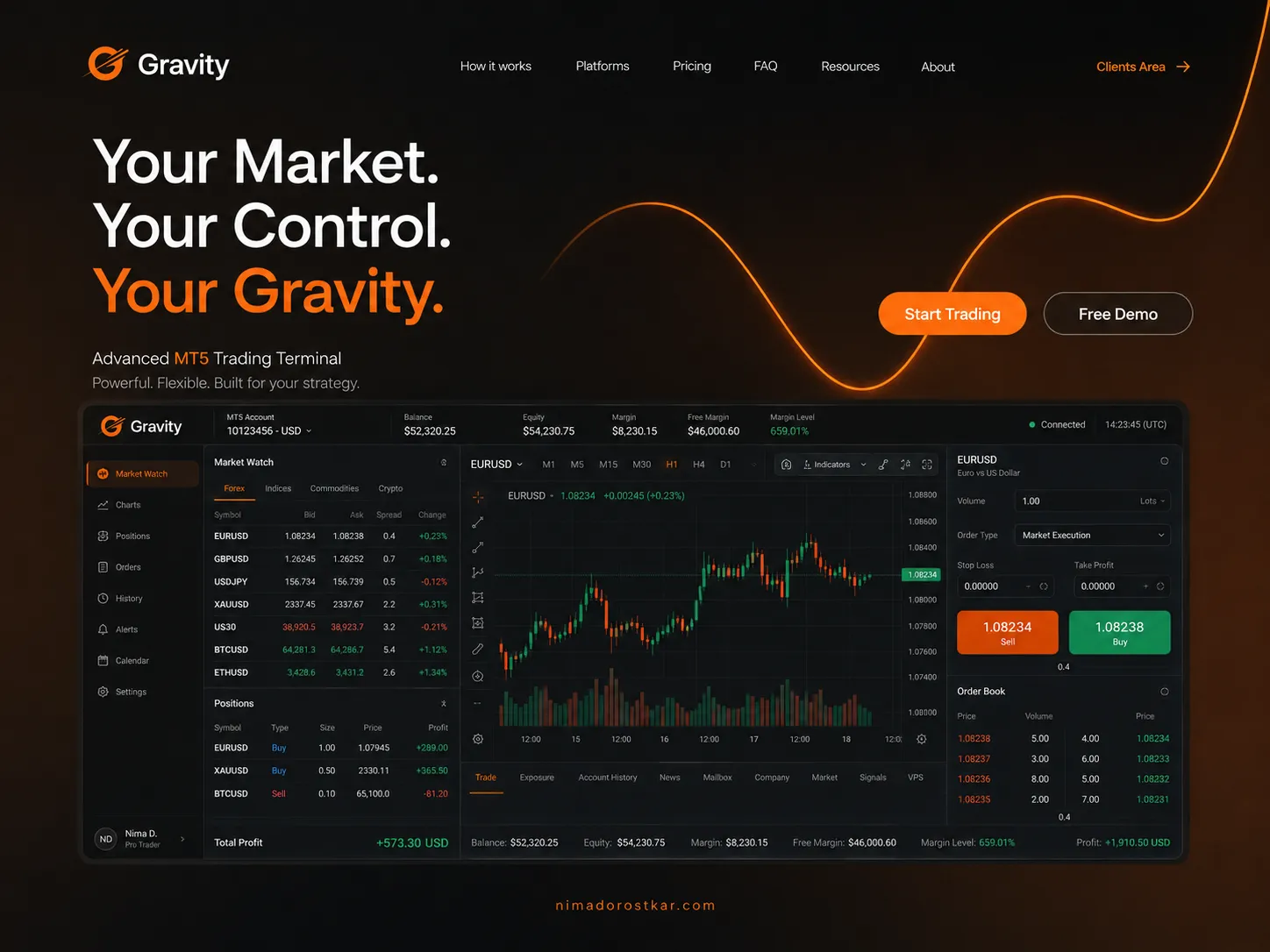
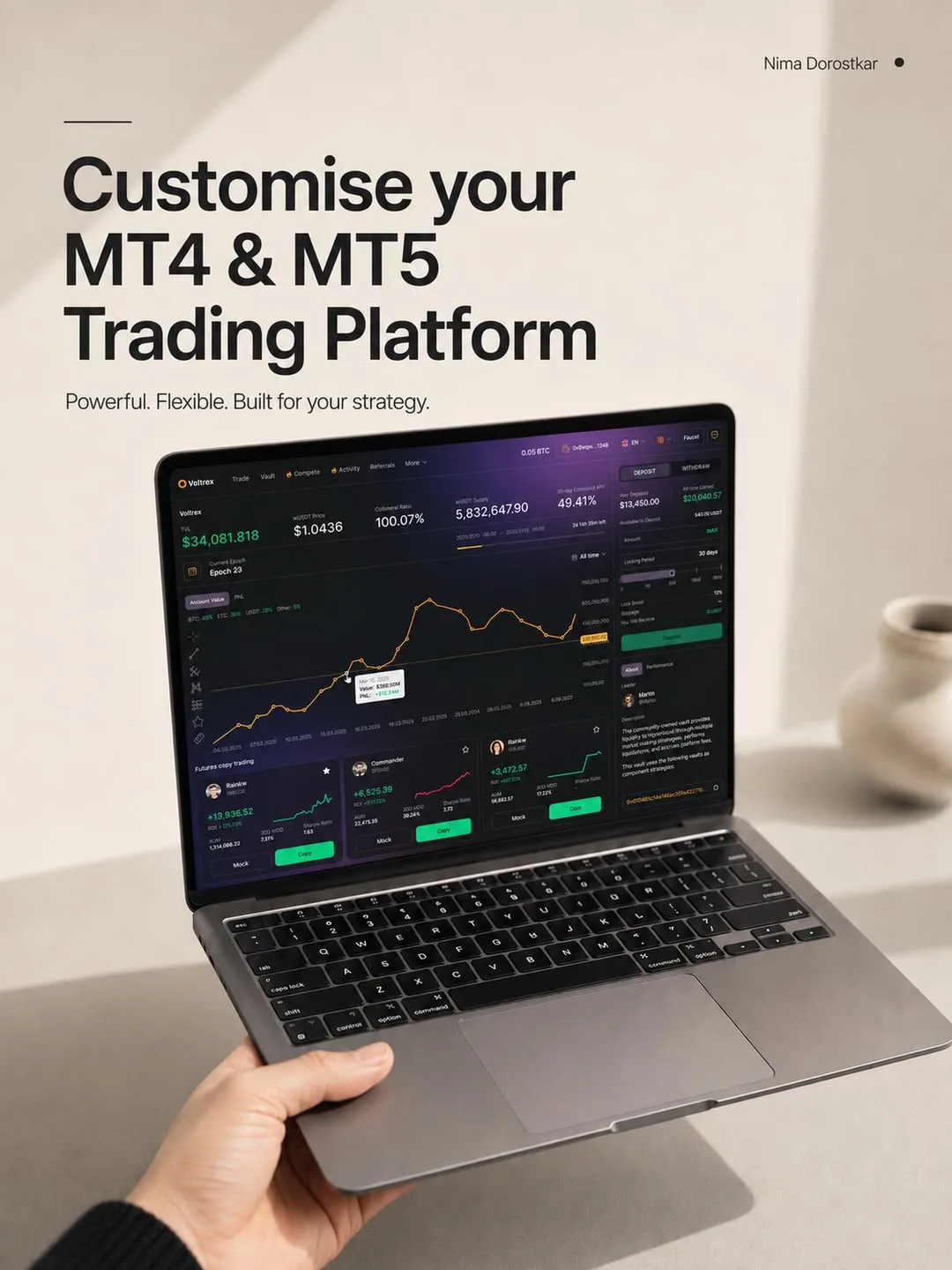
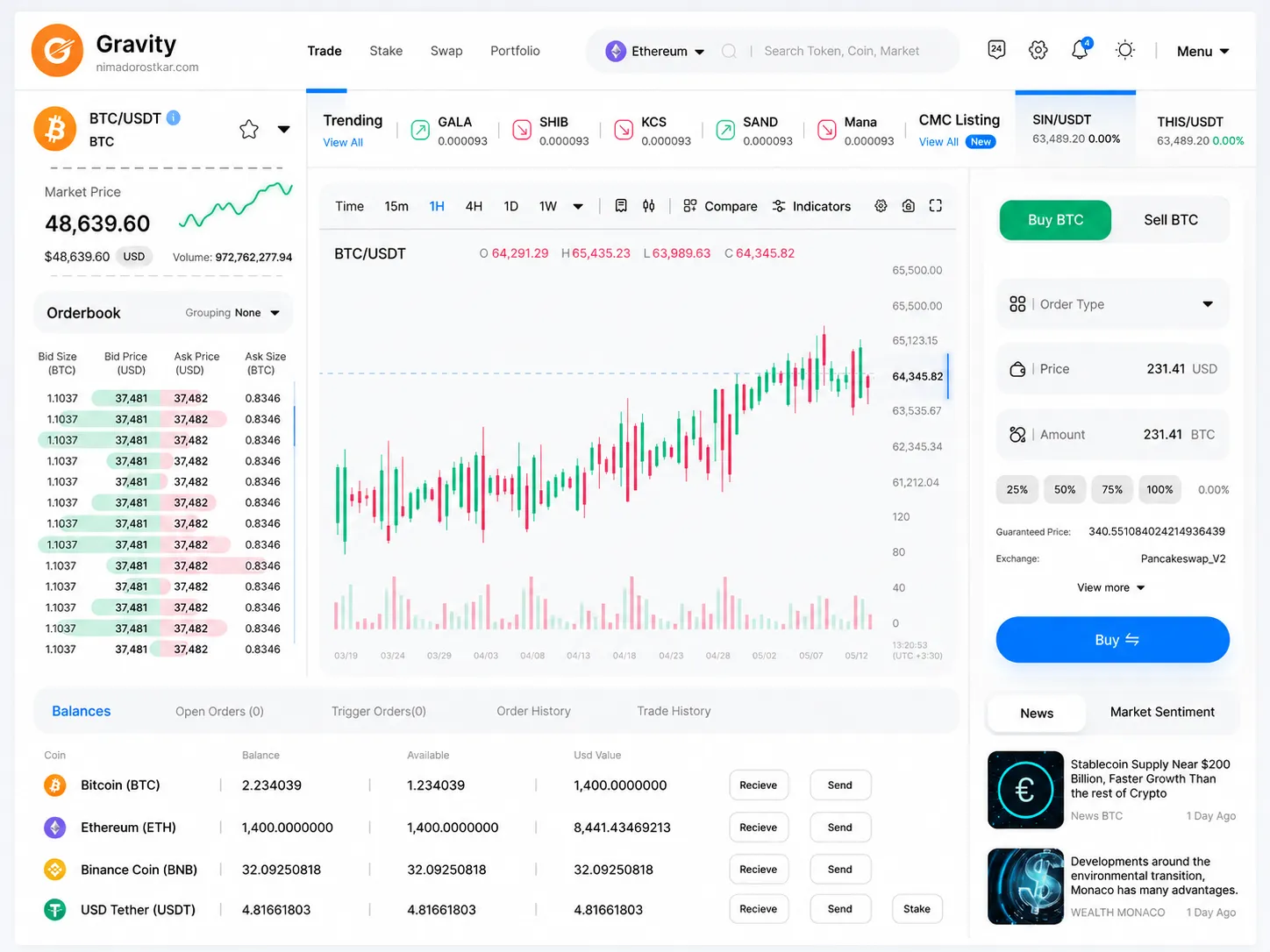
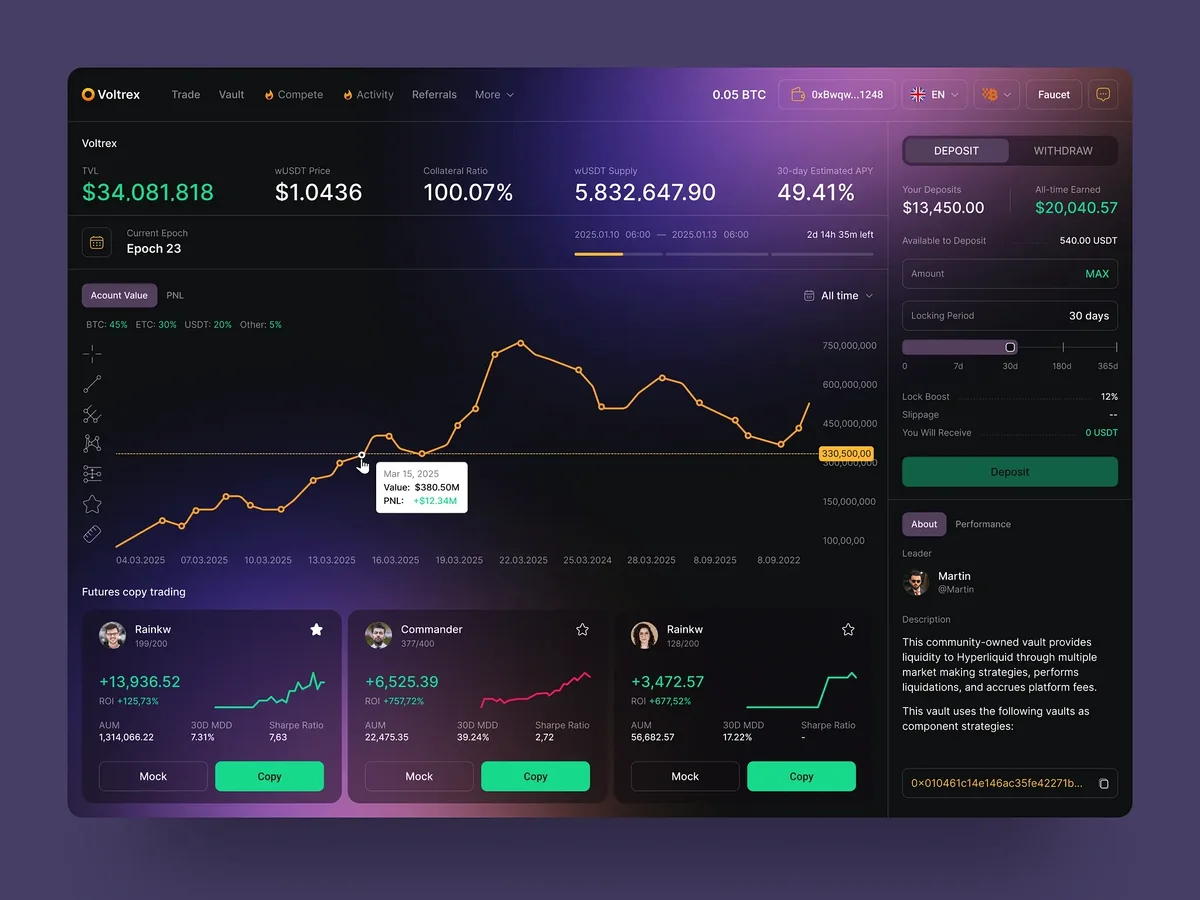
Terminals, portals, and dashboards our team designed and engineered — running in production, not on a mood board.
- Trading terminal · Forex & CFD
OPOTRADE
Online Forex and CFD trading platform for Opofinance, a broker licensed by the FSCA of South Africa (licence no. 54594).
opotrade.opofinance.com ↗︎ - Client portal · Brokerage
XFIV Broker
An online brokerage's client portal: trading accounts, funding, and the client journey from sign-up onwards.
client.xfiv.com ↗︎

Trading software developers
Senior developers who've
shipped broker systems.
Led by Nima Dorostkar — Senior Software Engineer, Lead Developer, and MBA with 12+ years building financial and trading platforms. Our architects, backend, frontend, mobile, DevOps, and QA engineers are senior, and they stay on your project from the first call to launch.
About Nima ↗︎- Senior engineers only
The people in your first call are the people who design and write the system. No juniors learning on your production.
- Built for money in motion
Fail-closed defaults, idempotent money operations, reconciliation, and monitoring from day one — trading systems fail differently.
- You own everything
Source code, infrastructure, and IP transfer to you. No licence rent, no per-account fees, no lock-in.
- One team, end to end
Gateway, APIs, terminal, apps, and infrastructure designed together — no finger-pointing between vendors.
Hire the team
Hire a trading software team,
your way.
- Typically 4–8 months
Complete brokerage stack
Launching or relaunching a brokerage: terminal, apps, client portal, CRM, payments, and platform integrations — delivered as one system, live on day one.
- Typically 2–4 months
A single component
One piece that plugs into your existing stack — a gateway, a terminal, a bridge, a prop engine, or an AI agent.
- Monthly, open-ended
Dedicated trading developers
A standing product team — architect, engineers, QA, DevOps — working inside your roadmap and your tooling.
- From 2 weeks
Audit & modernisation
Architecture, security, and performance review of what you run today — or urgent debugging of a live issue — plus a migration plan.
Development process
From first call
to live money.
- 01Discovery
Instruments, platforms, jurisdictions, user journeys, and integrations — mapped with your team.
- 02Architecture
A written technical design: services, data flows, failure modes, and infrastructure, before code.
- 03Build
Iterative delivery on staging environments, so you use working software every sprint.
- 04Hardening
Load tests, failover drills, and a security review before anything touches real money.
- 05Launch & operate
Deployment, monitoring, and support as your volumes, regions, and products grow.
- Discovery & architectureWeeks 1–3
- Client portal, CRM & KYCWeeks 4–12
- Platform integration & bridgeWeeks 5–14
- Web terminal & mobile appsWeeks 7–20
- Payments & PSPsWeeks 9–16
- Load, failover & security testsWeeks 19–22
- Soft launch & go-liveWeeks 22–24
Questions
Trading software development FAQ
How much does it cost to build a custom trading platform?
It depends on scope more than anything else. A single component — a web trading terminal, a forex CRM, or an MT5 plugin — costs a fraction of a complete broker stack with apps, client portal, payments, and platform integrations. The other big drivers are how many trading platforms and payment providers you connect, your regulatory requirements, and whether you want a proprietary trade server. After a short discovery we give you a written estimate by phase, so you can launch the most valuable part first.
How long does it take to build a trading platform?
A focused component such as a web terminal, CRM, or liquidity bridge typically takes 2–4 months. A complete broker platform — terminal, mobile apps, client portal, CRM, payments, and platform integrations — is usually 4–8 months, with workstreams running in parallel. You get a realistic timeline after discovery, not before.
Should I choose a white label or a custom trading platform?
A white label is the fastest way to test a market, but you rent someone else's product: the same features as other brokers, licence fees that grow with you, and no ownership of the code. A custom platform takes months instead of weeks, but it is yours — your features, your brand, no per-account fees, and no vendor lock-in. A common middle path is a hybrid: keep MT5 or cTrader as the trading core and build a custom terminal, CRM, and back office around it.
Can we switch from a white label or MT4 to a custom platform without disruption?
Yes. We plan migrations so clients keep their accounts and history and your back office keeps working: account and group mapping, parallel running of old and new systems, and a cut-over plan agreed with your dealing desk. The same approach covers MT4 to MT5 and moves between trading platforms.
What software do forex brokers use?
A forex broker typically runs a trading platform (MetaTrader 5, cTrader, DXtrade, Match-Trader, or a proprietary one), a liquidity bridge to its liquidity providers, a CRM with a client portal or trader's room, an IB portal, KYC/AML onboarding, payment service provider integrations, risk management for A-book and B-book flow, and regulatory reporting. We build each of these or integrate the ones you already have.
Can your software integrate with our existing CRM or trading platform?
Yes. Most brokers start with one component that plugs into what they already run — a web terminal on top of their MT5 server, a CRM that syncs with cTrader, or a bridge to a new liquidity provider. We integrate through each platform's own APIs, so nothing you run today has to be replaced first.
How long does it take to develop a custom forex CRM?
A custom forex CRM with client portal, KYC onboarding, deposits and withdrawals, and an IB portal typically takes 2–4 months as a focused project, longer when it replaces an existing CRM and its data has to be migrated.
What can you build with the MT5 Manager API and server plugins?
With the MetaTrader 5 Manager and Web APIs we build account and group management, automated deposits and withdrawals, real-time position and exposure sync, and reporting for your CRM and back office. Server plugins add logic inside MT5 itself — dynamic leverage, risk and dealing rules, bonuses, and copy trading — and the Gateway API connects MT5 to liquidity providers and custom price feeds.
How is copy trading different from PAMM and MAM?
In copy trading, followers keep their own accounts and a strategy provider's trades are mirrored into them proportionally. In a PAMM account, investors' funds are pooled and a manager trades on their behalf, with profit and loss allocated by each investor's share. In MAM, a manager trades one master account and the trades are allocated to separate investor accounts by lot or percentage rules. We build all three, including performance fees calculated on a high-water mark.
Do you build prop firm software?
Yes. We build prop firm challenge platforms with a rule engine for daily drawdown, maximum loss, profit targets, and consistency rules, plus automated account provisioning, payouts, fraud checks, and support for more than one trading platform — which matters since MetaQuotes' 2024 licence actions pushed prop firms toward cTrader, DXtrade, Match-Trader, and TradeLocker.
Can AI be integrated into an existing trading platform?
Yes. AI connects through the same APIs as the rest of your stack: a support agent that reads the CRM, risk scoring on live trade events, fraud and AML monitoring on payments, or a trader assistant inside the terminal. Every AI feature runs with PII redaction, audit logs, and a human in the loop for compliance and money decisions, and models can run on your own servers.
What programming languages are used to build trading platforms?
We use Go for low-latency services such as gateways, price feeds, and trade servers; C++ for MetaTrader server plugins; Python for data, risk, and AI work; and TypeScript with React and Next.js for web terminals and portals, with React Native for mobile apps. Data lives in PostgreSQL with TimescaleDB for ticks and Redis for real-time state, connected over REST, WebSocket, and FIX.
Can you debug or fix our existing trading platform?
Yes. We debug live trading platforms, including ones other teams built: rejected or stuck orders, MT5 plugin and Manager API failures, FIX session drops with liquidity providers, price spikes, terminal lag, and balances that don't reconcile between the CRM and the platform. Every engagement ends with a written root-cause report, the fix, and a test or monitor that keeps it fixed.
Which trading platforms do you work with?
We integrate with MetaTrader 4 and MetaTrader 5 through the Manager and Web APIs and server plugins, with cTrader, DXtrade, and Match-Trader through their own APIs, and with liquidity providers over FIX. We also build proprietary trade servers for brokers who want to own their core.
Who owns the source code?
You do. Source code, infrastructure, and intellectual property are transferred to your company. There is no licence fee per account and no lock-in to us as a vendor.
Can we hire dedicated trading software developers?
Yes. Besides fixed-scope projects, we provide a dedicated senior team — architect, engineers, QA, and DevOps — that works inside your repositories, tooling, and sprint rhythm, with documentation and handover built in from day one.
What happens after launch?
We stay on to operate and evolve the platform: monitoring, support, upgrades when trading platforms change their APIs, and new features as your volumes, regions, and products grow.
Do you build for regulated brokers?
Yes. Audit trails, role-based access, encryption, incident logging, and reporting pipelines are designed in from the start. Jurisdiction rules — such as ESMA's retail leverage caps from 30:1 on major FX pairs down to 2:1 on crypto, the 50% margin close-out, and negative balance protection — are enforced per client group in the engine, while your compliance team stays in control of policy.
Start a project
Tell us what your
brokerage needs.
Pick the pieces and send the brief — or reach me directly on WhatsApp, Telegram, email, or Instagram. You'll hear back from a senior engineer, not a sales rep.
What happens next
- 1We read your brief and come back with the questions that matter.
- 2A technical call with a senior engineer — not a sales rep.
- 3A written proposal: architecture, phases, timeline, and team.
Pick what you need — or just describe it below.